Technical
MOZA R5 Direct Drive Review: A UAE Owner's Perspective
An honest look at the MOZA R5 Direct Drive bundle from a UAE owner's perspective, covering feel, software, pedals, heat, noise and who it suits.
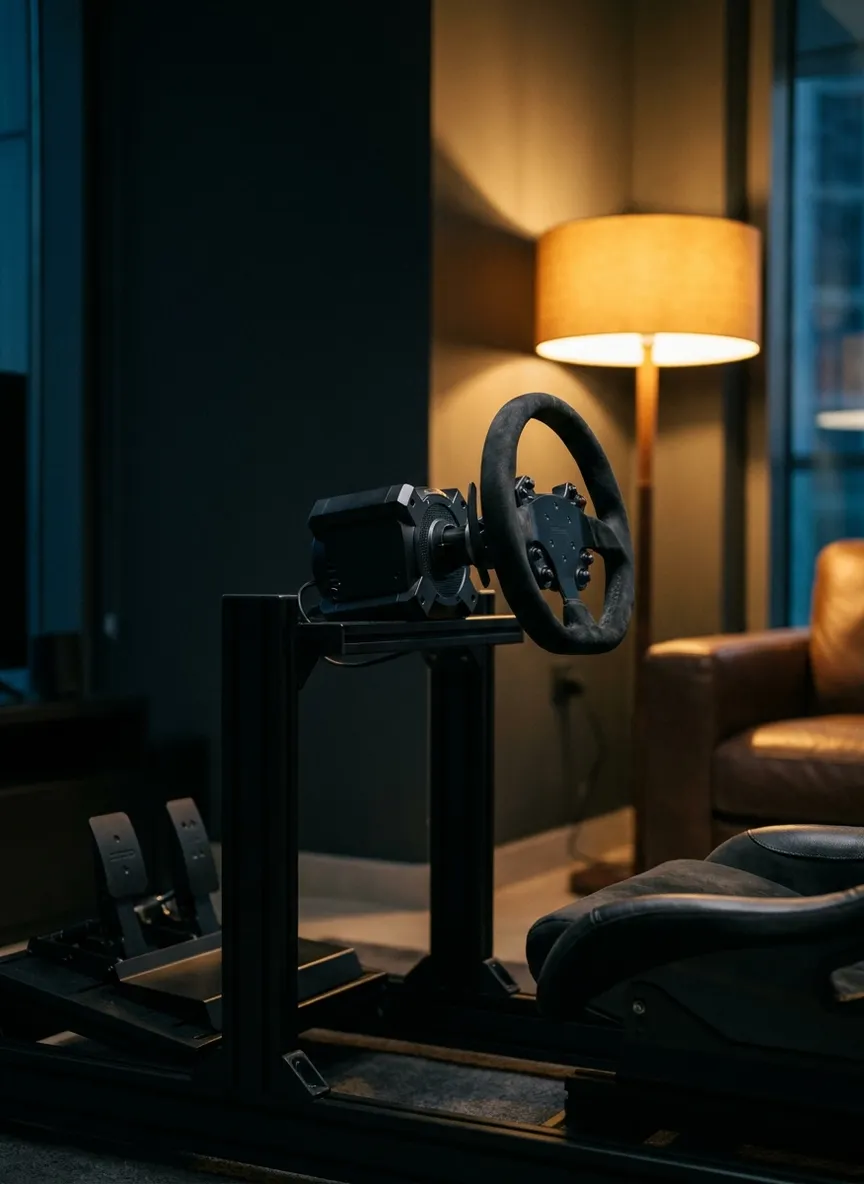
The MOZA R5 Direct Drive is a genuinely strong mid-range wheelbase for UAE home use: strong enough to teach real car behaviour, quiet and cool enough for apartment living when the room is air-conditioned, and backed by a software ecosystem that is more capable than its price suggests. Its main limitation is torque ceiling for drivers who eventually want maximum-fidelity feedback, and its included pedal set is a clear, expected upgrade path rather than a weakness.
We install the R5 bundle regularly across Dubai homes, and this review is written from that vantage point — not a spec sheet summary, but what actually matters once the rig is bolted down and being driven daily in a UAE household.
What does direct drive at this torque class actually feel like?
Direct drive means the motor connects straight to the wheel shaft, with no belt, gear or rubber bushing between the two. The immediate effect is detail: kerb strikes, tyre slip, and weight transfer through corners all arrive with far more texture than a belt-driven wheel at a similar price point.
At the R5's torque class, the feel sits in a genuinely useful zone. It is strong enough that you notice real resistance under braking and cornering loads, which teaches correct inputs rather than letting you get away with sloppy technique. It is not so strong that arms tire within twenty minutes, which matters for anyone doing longer stints or teaching a less experienced family member. Drivers coming from a belt-driven wheel typically describe the jump as immediate and obvious within the first few laps, most notably in how clearly kerbs and surface changes come through.
What is easy to miss on paper is how this translates across different car types. In lighter, lower-downforce cars the R5 communicates small slip angles and weight transfer with genuine subtlety, letting you feel a car starting to step out well before it becomes visually obvious on screen. In heavier or higher-downforce cars, the wheelbase still tracks the extra load convincingly, though drivers chasing the absolute peak of that end of the spectrum are the ones most likely to eventually want more torque headroom, as covered further down. For the broad middle of sim racing — road cars, GT machinery, most rally and touring car content — the R5's output range matches the demands of the content extremely well.
Build quality and mounting rigidity
The wheelbase housing itself feels solid, with the kind of density you expect from a motor-driven unit rather than a lightweight shell. That said, build quality of the wheelbase alone is only half the story — mounting rigidity determines whether that quality actually reaches the driver.
This is the point we stress hardest during installation. A direct drive wheelbase bolted to a flexing desk or a lightweight folding frame will visibly move under hard braking and cornering forces, which blurs exactly the fine detail that makes direct drive worth buying in the first place. The R5 needs a genuinely rigid mounting point — an aluminium-profile cockpit or an equivalently solid frame — to perform as intended. This is a hardware pairing issue, not a flaw in the wheelbase itself, but it is one many first-time buyers underestimate until they feel the difference side by side.
Pit House software: what it does well and where it falls short
MOZA's Pit House software handles calibration, force feedback tuning, firmware updates and game profile management from a single interface. For a mid-range price point, the depth on offer is a pleasant surprise — torque limits, damping, spring effects and individual force feedback channels are all adjustable, which lets the wheelbase be tuned toward a beginner-friendly setting or pushed harder as skill develops.
Where it shows its limits is polish. The interface is functional rather than elegant, and firmware update prompts occasionally need a restart or two to complete cleanly. Neither issue affects driving performance once configured, but neither is what you would call a seamless consumer experience. Most owners set the software up once during installation and rarely open it again beyond periodic firmware updates.
The pedal set and its upgrade path
The R5 bundle includes a two-pedal throttle and brake set on potentiometer-style sensors, meaning the pedals measure how far you press rather than how hard. This is entirely adequate for learning proper braking technique and enjoyable driving, but it is the component most owners choose to upgrade first.
A load-cell brake pedal, which measures pressure instead of travel, produces a more progressive and repeatable braking feel closer to a real car's brake pedal. Because MOZA's ecosystem is built around modular expansion, adding a load-cell brake later does not require replacing the wheelbase or any other component — it is a genuine upgrade path rather than a forced full system replacement. Our guide to best racing simulator setup for 2026 covers pedal upgrade priorities in more depth.
Noise and heat in a UAE apartment
Two questions come up constantly during consultations, and both deserve straight answers.
Noise: direct drive wheelbases produce a low motor hum during normal driving and occasional coil noise under strong force feedback effects, such as heavy kerb strikes. The R5 is not disruptively loud in a typical living room or dedicated games room, and most of the noise complaints we encounter actually trace back to a loose or rattling cockpit frame rather than the motor itself. A properly torqued, rigid mount reduces this considerably.
Heat: direct drive motors generate heat under sustained hard use, and the R5 is designed to manage this within normal limits in a cooled room. In a non-air-conditioned space during UAE summer months, extended sessions are more likely to trigger thermal throttling or reduced force feedback strength. We recommend siting the rig in an air-conditioned room as standard practice, which is rarely a constraint given most UAE homes are air-conditioned throughout.
Ventilation around the wheelbase itself is worth a moment's thought at installation time, separate from room cooling generally. Tucking the wheelbase tight against a wall or inside an enclosed desk cavity restricts airflow around the housing and makes it more likely to run warmer than it would in open air. Leaving a modest gap around the unit, and avoiding stacking cables or accessories directly against the motor casing, is a simple habit that keeps thermal performance closer to what the hardware is capable of, particularly during longer summer sessions.
MOZA R5 strengths vs limitations
| Strength | Limitation |
|---|---|
| Strong detail and feel for its torque class | Torque ceiling lower than flagship direct drive units |
| Deep, genuinely useful Pit House software | Software interface is functional, not polished |
| Modular ecosystem, easy pedal and accessory upgrades | Included pedals are a clear near-term upgrade candidate |
| Solid wheelbase housing and build | Performance depends heavily on mounting rigidity |
| Manageable noise and heat in cooled rooms | Less forgiving in non-air-conditioned spaces during summer |
Who does the MOZA R5 suit, and who should look higher up the range?
The R5 is a strong fit for:
- First-time direct drive buyers moving up from a belt or gear-driven wheel.
- Households where the rig will see regular but not extreme daily use.
- Anyone prioritising value and a genuinely usable software ecosystem over maximum torque.
Consider a higher-torque wheelbase instead if you are an experienced sim racer chasing maximum fidelity, race competitively in high-downforce categories where feedback forces are extreme, or specifically want the very strongest self-centring and resistance available. For most home drivers in the UAE, though, the R5's torque class is a considered middle ground, not a compromise.
Buying and supporting MOZA hardware in the UAE: the practical realities
Buying direct drive hardware in the UAE comes with a few practical considerations that do not apply everywhere.
- Warranty support — when purchased through an authorised local installer rather than an overseas retailer, warranty claims are handled locally, avoiding international shipping delays and customs complications.
- Spares and accessories — availability of pedal upgrades, wheel rims and mounting hardware is generally reliable through UAE-based suppliers, though lead times on niche accessories can run longer than headline components.
- Setup and calibration — direct drive wheelbases are not plug-and-play in the way a basic gamepad is; proper mounting, calibration and force feedback tuning genuinely benefit from professional installation rather than a DIY unboxing.
- Climate considerations — as covered above, siting the rig in an air-conditioned space is a practical necessity for UAE conditions, not a nice-to-have.
Our own MOZA R5 racing simulator package addresses each of these directly: local warranty support, professional mounting and calibration, and games pre-installed and tested before handover. If you are still deciding between direct drive and belt drive more broadly, our direct drive vs belt drive comparison is a useful next read, and our full cost breakdown covers what a turnkey R5 installation costs against buying components separately.
Booking a consultation
If you are weighing up the R5 against other options, a consultation is the fastest way to get a straight answer for your specific space and budget, rather than relying on generic spec comparisons. Contact us to book one, browse our gallery of completed R5 installations, or check our FAQ and warranty pages for further detail before you decide.
Questions
Quick answers.
Is the MOZA R5 good for beginners?
The MOZA R5 suits beginners well because its torque is strong enough to teach proper technique and communicate genuine car behaviour, without being so powerful that it becomes tiring or intimidating during long learning sessions. Its software also includes lower-torque presets that can be raised gradually as confidence builds.
Is the MOZA R5 loud?
Direct drive wheelbases in this class produce a low motor hum and occasional coil noise under hard force feedback effects, but the MOZA R5 is not disruptively loud in normal home use. In a typical apartment living room, it is generally quieter than concern about neighbours would suggest, though a mounted, rigid cockpit reduces rattle-related noise significantly compared to a loose desk setup.
Does the MOZA R5 overheat in UAE apartments?
Direct drive motors generate some heat under sustained hard use, but the MOZA R5 is designed to manage this within normal operating limits in an air-conditioned room. In a non-air-conditioned space during summer, extended sessions are more likely to trigger thermal throttling, so a cooled room is recommended for consistent performance.
What pedals come with the MOZA R5 bundle, and can they be upgraded later?
The R5 bundle typically ships with a two-pedal throttle and brake set on a potentiometer-style sensor. Many owners upgrade to a load-cell brake pedal after their first several months, since braking consistency benefits most from the switch, and MOZA's ecosystem is designed to accept pedal upgrades without replacing the wheelbase.
How do I get MOZA R5 warranty support in the UAE?
When purchased through an authorised local installer, MOZA R5 warranty support in the UAE is typically handled through that installer rather than requiring you to ship hardware internationally. Our installations include a 60-day warranty against genuine faults plus 30 days of technical support for calibration and software help.
Is the MOZA R5 better than a belt-driven wheel at a similar price?
For most drivers, a direct drive wheelbase like the R5 outperforms a similarly priced belt-driven wheel in feel, detail and long-term durability, since direct drive removes the belts and gears that absorb fine feedback. The trade-off is torque ceiling relative to higher-end direct drive units, not a comparison against belt drive, where direct drive wins clearly.
Keep reading
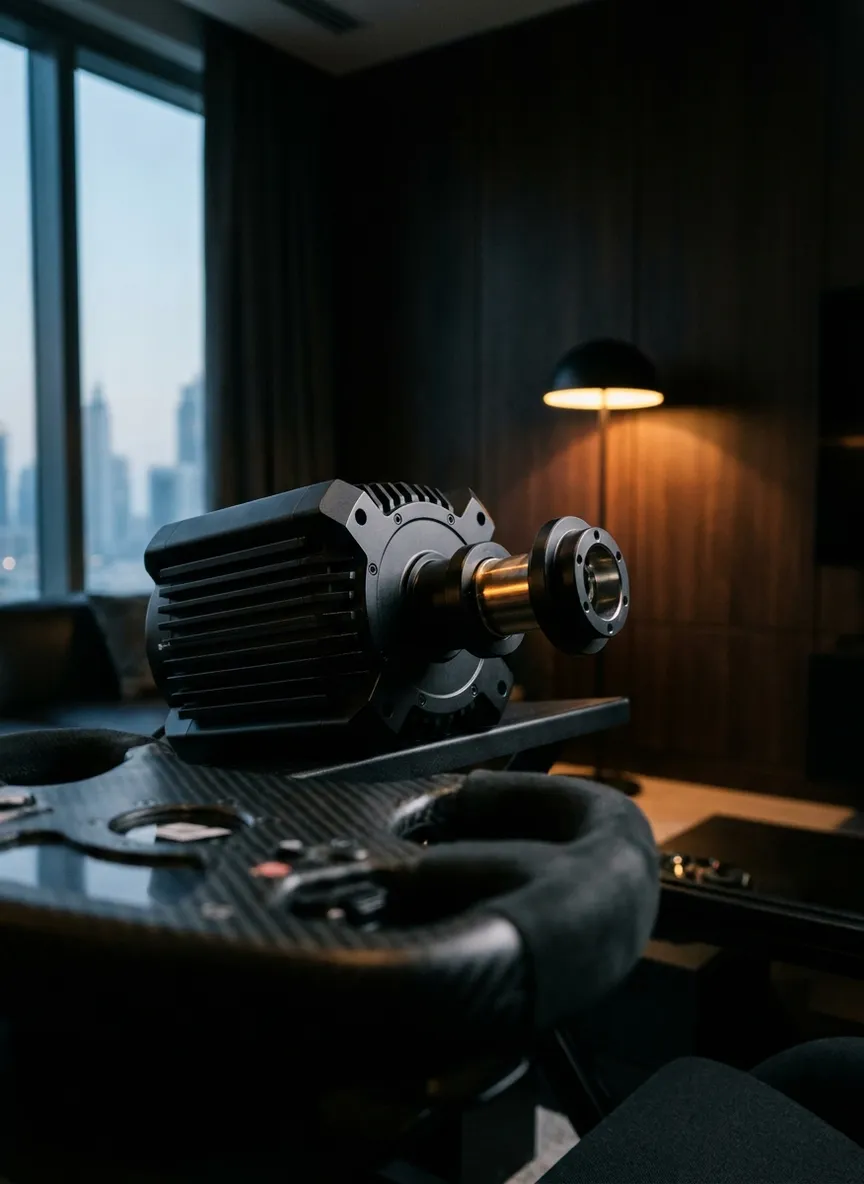 Direct Drive vs Belt Drive Racing Wheels: What's the Real Difference?
Gear, belt, and direct drive wheels explained in plain language, covering torque, feedback detail, noise, and which one actually suits how you drive.
Read more →
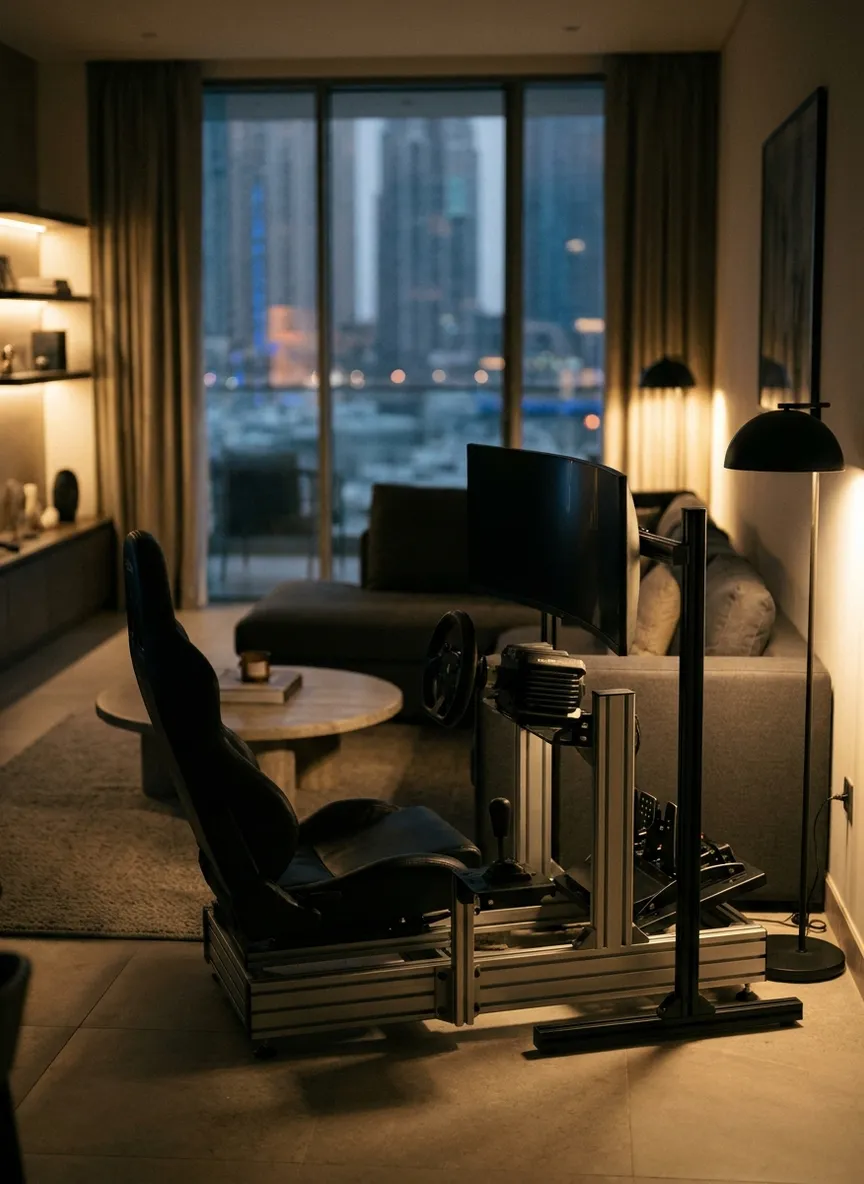 How Much Does a Racing Simulator Cost in Dubai?
A clear breakdown of racing simulator prices in Dubai, from entry-level gear-driven wheels to professional direct drive rigs, and the costs people forget.
Read more →
 Is a Racing Simulator Worth It? An Honest Cost-Per-Hour Breakdown
An honest look at whether a home racing simulator is worth it, comparing cost per hour, skill transfer, and longevity against karting and track days.
Read more →
Ready to build your racing room?
Book a free, no-obligation consultation. We'll scope your space and come back with a clear plan.