Buying Guide
How Much Does a Racing Simulator Cost in Dubai?
A clear breakdown of racing simulator prices in Dubai, from entry-level gear-driven wheels to professional direct drive rigs, and the costs people forget.
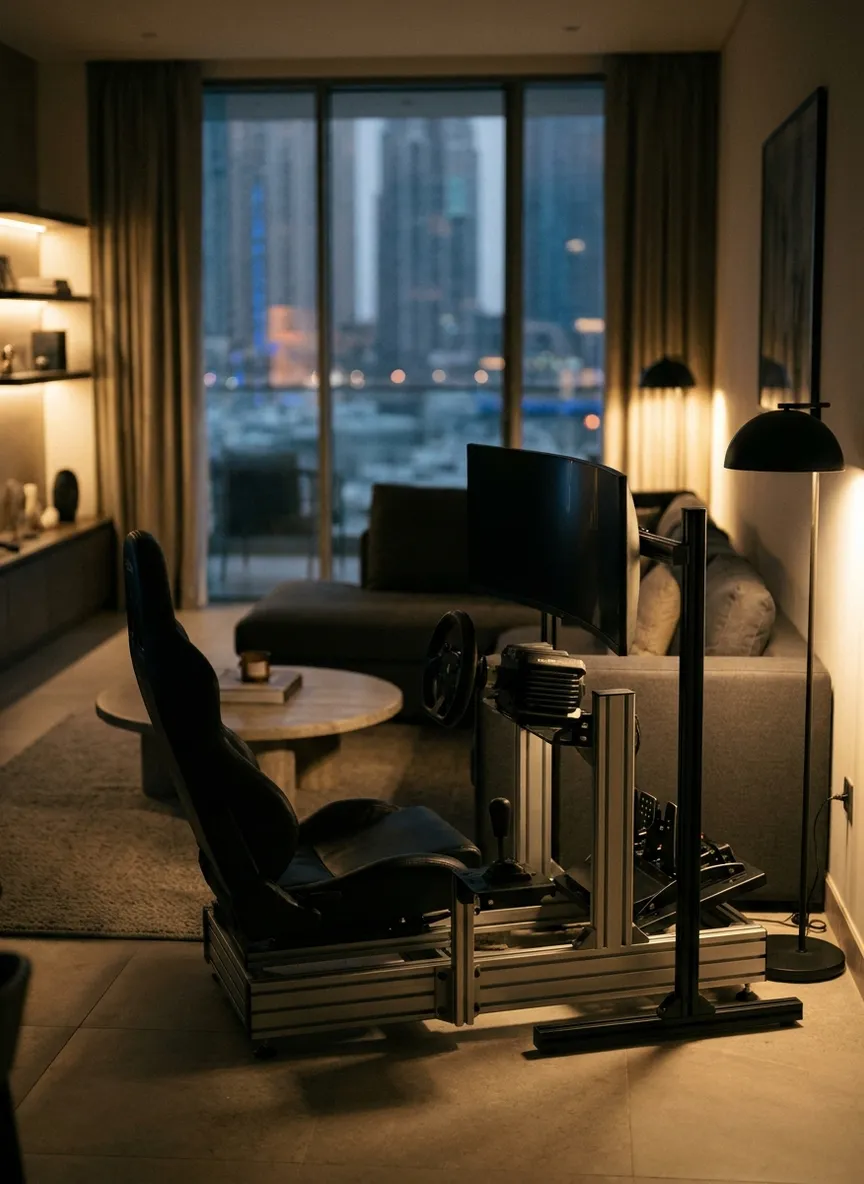
Racing simulator costs in Dubai span a wide range: roughly AED 2,500 for an entry-level gear-driven wheel on a desk clamp, up to AED 20,000 or more for a professional direct drive rig with a triple-screen setup. Most serious home simulators, including direct drive systems with a proper cockpit, land between AED 8,000 and 15,000 once delivery and installation are factored in. Where you land in that range depends far less on the badge on the wheel than on the drive technology underneath it.
This guide breaks the market into four practical tiers, explains what each one actually feels like to drive, and flags the costs that catch people out after they've already paid for the wheel.
What are the price tiers for a racing simulator?
The simulator market splits cleanly by drive technology, and price follows that split almost exactly. A wheel's drive type determines how force feedback is generated, which is the single biggest factor in how realistic the rig feels.
| Tier | Typical AED range | Drive type | What it feels like |
|---|---|---|---|
| Entry | 2,500 – 4,000 | Gear-driven | Notchy, artificial resistance; fine for casual arcade play |
| Mid | 5,000 – 9,000 | Belt-driven | Smoother, some detail, but belts stretch and add play over time |
| Direct drive | 8,000 – 20,000 | Motor directly on the wheel shaft | Sharp, immediate, textured feedback close to a real car |
| Professional | 20,000+ | High-torque direct drive, multi-monitor, load-cell pedals | Track-day-grade training tool, often used by sim racing teams |
These figures are general guidance, not fixed pricing, and cockpit quality, pedal type, and screen choice move the number considerably within each tier. If you want the mechanics behind why direct drive costs more, our article on direct drive versus belt drive racing wheels walks through the engineering difference in plain terms.
Entry tier: gear-driven wheels
Gear-driven wheels use a motor connected to the steering shaft through a set of plastic or metal gears. They are the cheapest way into sim racing and are genuinely fine for casual, occasional play. The trade-off is that the gears introduce backlash, so the wheel has a slightly notchy, artificial feel and the force feedback motor is usually too weak to convey real road detail. Most gear-driven wheels also clamp to a desk rather than sitting in a dedicated cockpit, which limits how much torque they can safely handle before the whole setup shakes.
Mid tier: belt-driven wheels
Belt-driven wheels replace the gears with a reinforced belt, which removes most of the backlash and gives a noticeably smoother, quieter feel. This is the tier most home enthusiasts land in if they are not ready for direct drive, and it pairs well with a semi-rigid cockpit rather than a desk clamp. The limitation is mechanical: belts stretch slightly over months of use, which reintroduces play, and there's still a physical link between motor and rim that softens the sharpest details a road surface can produce.
Direct drive: where the MOZA R5 sits
Direct drive systems mount the motor directly to the wheel shaft, with no belt, gear, or gearbox between them. This is the technology used in professional sim racing and increasingly in home setups, because it delivers force feedback with almost no latency and enough resolution to feel subtle changes in grip, kerbs, and road texture. The MOZA R5 sits at the accessible end of the direct drive category, built for exactly this kind of home installation rather than a competition rig costing multiples more. Direct drive wheels also demand a rigid cockpit, because a flexing frame absorbs the torque instead of transmitting it to your hands.
Professional tier
Above the R5 sit higher-torque direct drive wheels, load-cell brake pedals that measure pressure rather than travel, and triple-monitor or VR setups. This tier is built for drivers training seriously for motorsport or running full sim racing leagues, and the cost reflects specialised components rather than any change in the basic idea. Most home users, even serious ones, don't need to go this far to get a genuinely realistic experience.
What hidden costs do people forget when budgeting?
The price tag on a wheel or a bundle is rarely the full cost of a working simulator. These are the line items that most commonly get missed:
- Cockpit rigidity. A direct drive wheel bolted to a flexible frame will shake, creak, and eventually damage the mounting points. A properly stiffened cockpit costs more than a basic frame but is what actually lets you feel the torque instead of losing it to flex.
- Gaming PC. Sim racing titles are demanding on GPU and CPU, particularly at high refresh rates. A capable PC is typically the single largest cost outside the simulator itself.
- Monitor or TV. Screen size and refresh rate both affect immersion; a larger, faster panel makes a noticeable difference but adds to the budget.
- Mounting hardware. Getting a screen positioned at the correct height and distance usually needs a dedicated arm or stand, not just a shelf.
- Shipping and customs. Imported direct drive hardware bought from overseas retailers often attracts freight charges and UAE import duty that aren't visible on the listed price.
- Installation labour. Assembling a cockpit, wiring a wheelbase, mounting pedals, and routing cables correctly takes several hours even for someone experienced.
- Software configuration and calibration. Force feedback strength, damping, and game-specific settings need tuning per title to feel right; this is often the step DIY builders skip and then wonder why the wheel feels wrong.
What does a turnkey package actually include?
A turnkey installation is priced to cover the whole chain from hardware to a ready-to-drive rig, not just the wheel. Desert Drift Kings' package is a useful reference point because it makes every line item explicit rather than bundling them into a vague "setup fee."
- MOZA R5 Direct Drive system — wheelbase, steering wheel, pedal set, and manual shifter.
- Premium racing cockpit, sized and rated to handle direct drive torque without flexing.
- Monitor or TV mount, professionally fitted at the correct distance and height for your seating position.
- Delivery across Dubai and the UAE, with assembly carried out on-site rather than shipped flat-packed.
- Software configuration and calibration, tuned per game rather than left on default settings.
- Steam account setup assistance and three pre-installed titles — Forza Horizon 6, Assetto Corsa, and BeamNG.drive.
The current price is AED 6,640, reduced from AED 8,499 as a limited offer. If you want more force feedback, the MOZA R9 bundle is AED 9,350 and the MOZA R12 bundle is AED 9,940, with the same installation service. It does not include a gaming PC, TV or monitor, keyboard and mouse, speakers or headset, or desk and room furniture — these are available through a bespoke quotation if you need them sourced alongside the rig. Full details sit on the pricing page, and the complete specification is on the MOZA R5 racing simulator page.
Is it cheaper to build your own rig?
On paper, sourcing components separately can look less expensive, especially if you already own a PC and screen. In practice, once you add shipping from overseas retailers, UAE import duty, a rigid cockpit that won't flex under direct drive torque, cabling, and the hours needed to configure force feedback correctly per game, the gap narrows considerably. What a DIY build can't shortcut is time: sourcing, assembling, and calibrating a rig correctly typically takes far longer than the 10–14 business days a turnkey order takes from booking to a working system in your home.
If you're weighing the decision against other things AED 8,000-plus could buy — track days, karting sessions, or simply not doing it — our article on whether a racing simulator is worth it runs the actual cost-per-hour numbers.
What questions should you ask before booking?
Price comparisons across suppliers are only meaningful if you're comparing the same scope of work. Before booking anything, it's worth asking:
- Is the cockpit rated for the wheel's torque, or is it a generic frame? A direct drive wheel bolted to an unrated frame will underperform regardless of the wheelbase's specification.
- Is calibration included, or is the rig left on default settings? Default force feedback settings rarely feel right out of the box; proper calibration is a meaningful chunk of the value in a turnkey price.
- What's covered if something goes wrong after installation? Ask specifically what a warranty excludes as well as what it covers — most exclude liquid damage, physical damage, and unauthorised modification, which is standard, but it should be stated clearly.
- How long does the process take from booking to a working rig? Sourcing and assembling direct drive hardware to order typically takes longer than off-the-shelf delivery, and a realistic timeline should be part of any quote.
- Is delivery and access to your specific property accounted for? A quote that doesn't ask about lift access, stairwells, or doorway width hasn't actually priced your installation yet.
Why does a direct drive package cost more than it looks like it should on paper?
It's a fair question, since a wheelbase, a set of pedals, and a cockpit frame don't sound like they should add up to several thousand dirhams once bought individually online. The gap is almost entirely in labour and expertise rather than markup: sourcing genuine, correctly matched components, assembling a cockpit so it doesn't flex under torque, running and hiding cabling neatly, mounting a screen at the right height and distance, then calibrating force feedback per game rather than leaving it on factory defaults, are all skilled, time-consuming steps. Skipping any one of them is usually where a cheaper DIY attempt ends up feeling disappointing compared with the same hardware installed properly.
How much space and setup does the price include?
Turnkey pricing assumes standard access and a reasonably sized room; unusual delivery conditions (tight stairwells, no lift access) are discussed at the consultation stage rather than being a surprise on installation day. If you're not sure your space works, our guide to racing simulator space requirements covers minimum floor area, ceiling height, and power sockets in detail before you book anything.
We've installed rigs across a wide range of home types, from high-rise apartments to sprawling villas, and space constraints look different in each. A short conversation at booking stage resolves almost all of it.
Ready to see what a turnkey rig costs for your home?
Pricing depends on a handful of specifics — your space, your screen setup, and whether you need a PC sourced alongside the simulator. The most accurate way to get a number is a short consultation, where we walk through your room and your goals before anything is ordered. Get in touch to book a consultation, or browse the gallery to see completed installations first.
Questions
Quick answers.
What is the average cost of a racing simulator in Dubai?
It depends heavily on the drive type. Entry-level gear-driven wheel setups start around AED 2,500 to 4,000, mid-tier belt-driven kits sit between AED 5,000 and 9,000, and direct drive systems typically range from AED 8,000 to 20,000 once a cockpit, mounting, and installation are included.
Is a direct drive simulator worth the extra cost over a belt-driven wheel?
For most drivers who plan to use the rig regularly, yes. Direct drive removes the belts and gears that cause play, noise, and wear, giving cleaner force feedback and a longer usable life, which lowers the effective cost per year even though the upfront price is higher.
Does the AED 6,640 package include the PC and screen?
No. The turnkey package covers the MOZA R5 Direct Drive system, wheel, pedals, shifter, cockpit, mounting, delivery, installation, calibration, and pre-loaded games. A gaming PC, monitor or TV, keyboard and mouse, and speakers are not included but can be added through a bespoke quotation.
What hidden costs catch people out when pricing a home simulator?
The most common are cockpit rigidity (cheap frames flex under torque), shipping and customs on imported hardware, professional mounting for a monitor or triple-screen setup, and the hours of software configuration and force-feedback calibration needed to make a rig actually feel right.
Is it cheaper to build a simulator myself or buy a turnkey package in Dubai?
Self-building can look cheaper on paper, but once you price in shipping from overseas retailers, import duty, a rigid cockpit, cabling, and the time to configure and calibrate everything correctly, a turnkey package is often close in total cost and considerably faster to get right.
Keep reading
 Is a Racing Simulator Worth It? An Honest Cost-Per-Hour Breakdown
An honest look at whether a home racing simulator is worth it, comparing cost per hour, skill transfer, and longevity against karting and track days.
Read more →
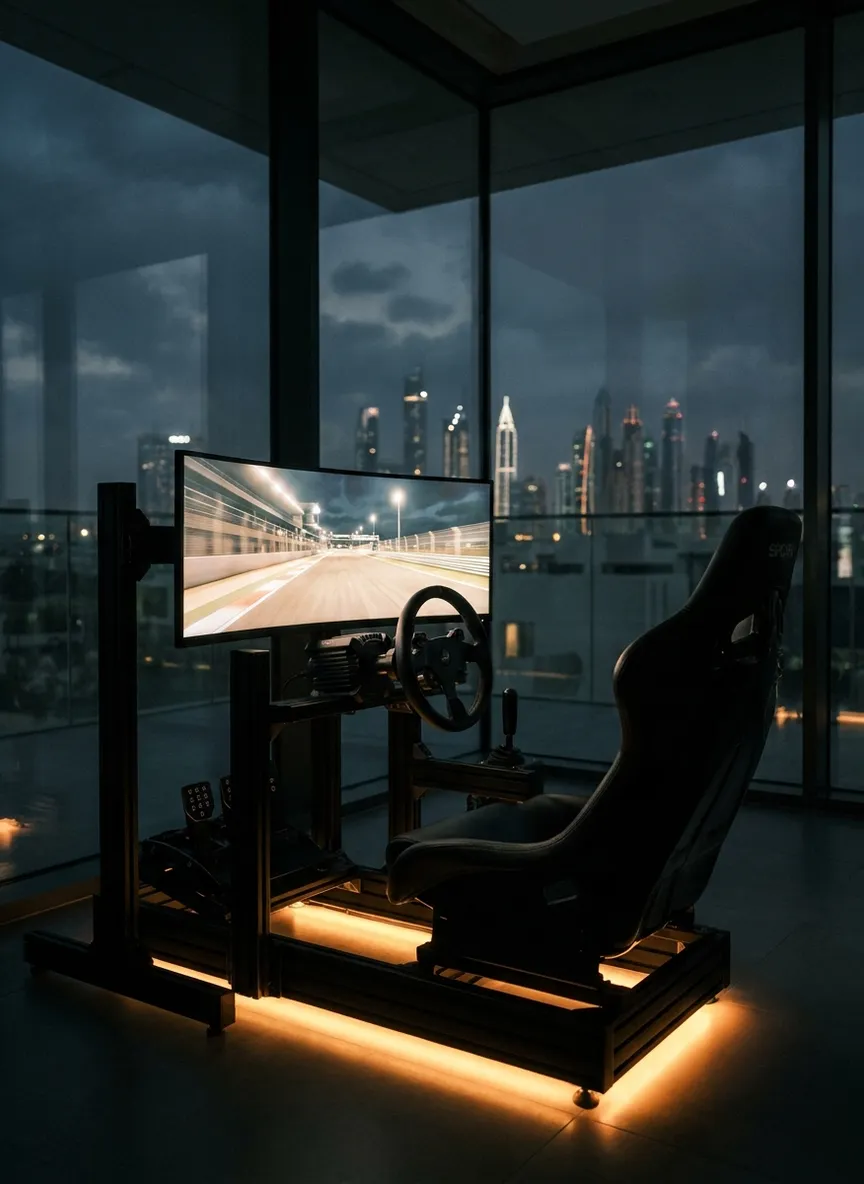 The Best Racing Simulator Setup for Home in 2026
A specification guide to building a home racing simulator in 2026, from wheelbase torque to display strategy, with a good/better/best comparison table.
Read more →
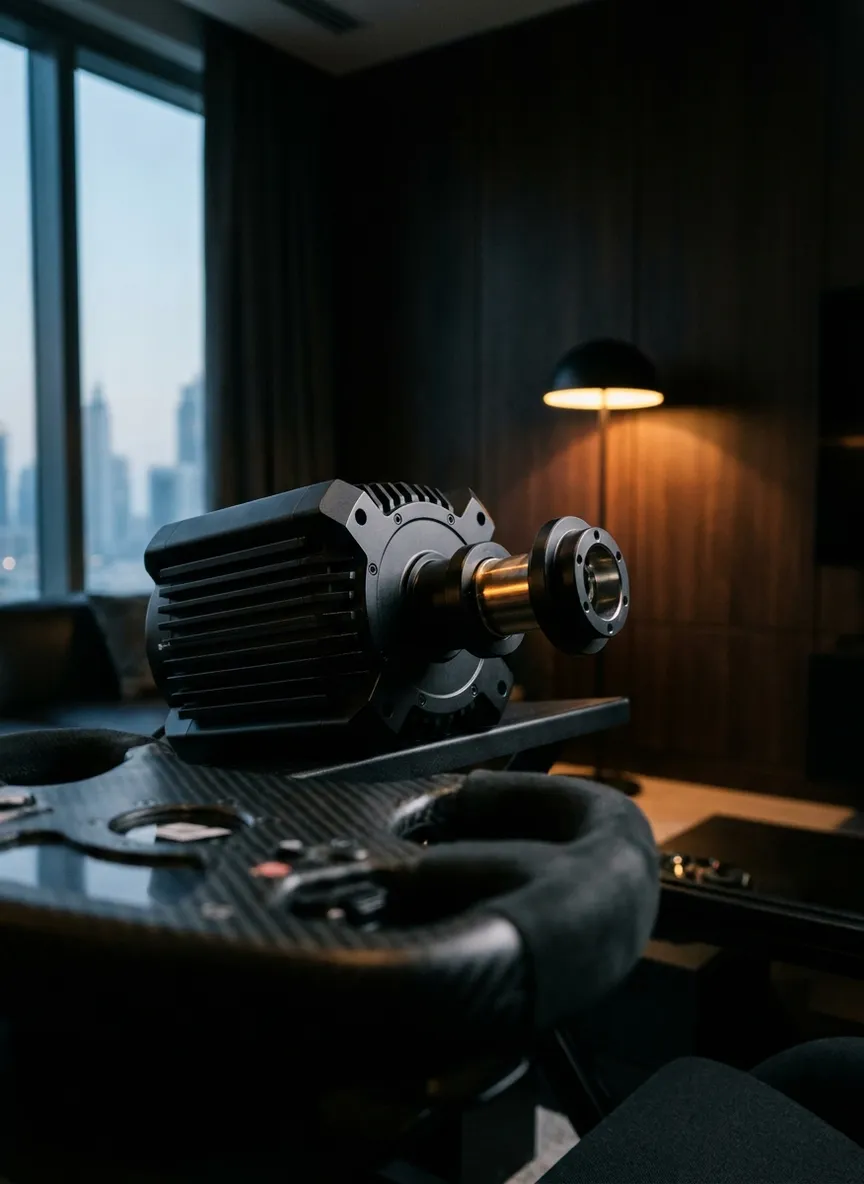 Direct Drive vs Belt Drive Racing Wheels: What's the Real Difference?
Gear, belt, and direct drive wheels explained in plain language, covering torque, feedback detail, noise, and which one actually suits how you drive.
Read more →
Ready to build your racing room?
Book a free, no-obligation consultation. We'll scope your space and come back with a clear plan.